
New Delhi will substantially reduce tariffs on industrial and agricultural goods while continuing to protect sensitive sectors. Tariffs on some agricultural products that are not traditionally considered sensitive will be brought down to zero, while in the case of relatively sensitive items, duties will be reduced in a graded manner and quotas will be imposed.

India and the US have entered a new phase in their relationship, marked by greater parity, point out Harsh V Pant and Vivek Mishra.

A speeding Lamborghini, allegedly driven by the son of a tobacco trader, injured at least six people in Kanpur after hitting pedestrians and two-wheelers.

Six months after its India debut, the Vietnamese automaker has overtaken established players such as Hyundai Motor, BMW, Kia, and Chinese EV major BYD.

The BSE Smallcap index hit an over eight-month low of 47,627.96, falling 3 per cent in Tuesday's intraday trade amid selling pressure due to ongoing tariff-related concerns and rising geopolitical tensions.

'In the last one year, we have added more than Rs 1.7 trillion, and we are on track.'

Multiple tailwinds for the automobile sector, including a cut in goods and services tax (GST) rates, are keeping analysts bullish on auto stocks from a long-term perspective, even as they see the rally running its course in the near term.

Mexico on Thursday imposed a tariff of up to 50 per cent on imports from its non-preferential trade partners, including India, a move that might hit New Delhi's annual $5.75 billion shipments to its third-largest car export market.

The government is finalising a major GST overhaul with automated refunds, pre-filled returns, and analytics-based scrutiny to simplify compliance and boost liquidity for MSMEs.

Stock market is gearing up for an eventful week ahead where key triggers such as quarterly earnings from corporates, the US Fed interest rate decision and the upcoming Union Budget for 2026-27 would grab the limelight, analysts said.

The fiscal tilt towards capex benefits companies in investment-related sectors like capital goods, defence equipment, engineering & construction and metal & mining. The planned cut in revenue expenditure will weigh on companies in consumption sectors like FMCG, consumer durables and retail.
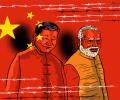
India's trade deficit with China is expected to reach $106 billion in 2025 as imports are rising faster than the country's exports to the neighbouring country, think tank GTRI said on Friday.

In October, small car wholesales of the auto industry -- excluding Tata Motors -- went up by 8.4 per cent Y-o-Y to 116,601 units, the data showed. However, the utility vehicle (UV) segment which includes sports utility vehicles (SUVs) as well as multi-purpose vehicles (MPVs), saw a bigger growth in October.

Shares of tyre manufacturers have outperformed broader equity benchmarks, buoyed by multiple tailwinds. Softer raw material prices, an uptick in demand from automakers following the reduction of the goods and services tax (GST) rates, and steady replacement demand have lifted sentiment toward the sector.

Passenger vehicle dispatches from companies to dealers raced to the highest ever sales mark in a calendar year in 2025 as a reduction in prices due to GST reforms led to robust sales in the festive season, industry body SIAM said on Tuesday.

Finance Minister Nirmala Sitharaman's biggest challenge will be to find a new growth driver, particularly against the backdrop of a global economy ravaged by heightened uncertainty and fragmentation, financial markets on a precipice, and global commodity prices on a continued uptrend.

India has been on an FTA-signing spree of late. Since 2021, it has signed eight trade agreements, three of which -- with the UK, Oman and New Zealand -- were finalised in 2025 alone.

'...but I would not like to put a timeline to it'

Maruti Suzuki India on Thursday posted a marginal increase in consolidated net profit to Rs 3,792 crore for the June quarter, with robust overseas shipments compensating for the drop in domestic sales. The country's largest carmaker reported a net profit of Rs 3,760 crore in the April-June period of the previous fiscal year.
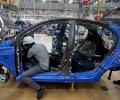
An ACMA-BCG report has targeted Indian auto component exports to hit $100 billion - nearly a fivefold increase from $21 billion currently

'The market is still very bullish. The demand is so strong that for eight models, we have no units in our factories to dispatch to dealers,' said Partho Banerjee, senior executive officer, marketing & sales, Maruti Suzuki India (MSIL).

Bajaj Auto - the country's most valuable two-wheeler (2W) company by market capitalisation - met Street expectations in the January-March quarter (Q4) of 2024-25 (FY25) but still ended Friday as the worst performer on the Nifty 50, slipping 3.1 per cent.

Maruti Suzuki India plans to localise battery production and other critical components over the next few years as part of strengthening the overall EV ecosystem in the country. The company, which plans to launch its first electric vehicle - e VITARA in the domestic market next year, is looking to instill confidence in the buyers as it looks to strengthen the overall EV ecosystem.

The Reserve Bank of India (RBI) on Friday delivered a 25 basis point (bps) repo rate cut analysts expected, driven by the strong 8.2 per cent GDP growth in the September quarter. However, analysts do not expect a runaway market rally as the impact of US tariffs continues.

India's merchandise exports to the US rose by 16.93 per cent to $8.83 billion in May, while imports dipped by 5.76 per cent to $3.62 billion during the month, according to the commerce ministry data. During April-May, the country's exports to the US increased by 21.78 per cent to $17.25 billion, while imports rose by 25.8 per cent to $8.87 billion, the data showed.

Maruti Suzuki will introduce eight SUVs over the next five years taking its overall model range to 28 as it aims to regain 50 per cent market share in the domestic passenger vehicle segment, Suzuki Motor Corporation Representative Director and President Toshihiro Suzuki said on Wednesday.
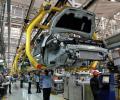
Auto parts exports from India may see a slight slowdown as US President Donald Trump's 25 per cent tariff could increase car prices for buyers by 8-25 per cent, thereby affecting demand, experts believe.

With demand continuing to be strong post the festive season, leading automakers, Maruti Suzuki, Tata Motors and Mahindra & Mahindra, saw robust growth in sales in November as compared to the same month last year. Maruti Suzuki India reported the best-ever total sales, including exports, last month at 229,021 units, a year-on-year growth of 26 per cent as compared to November last year.

Given the stronger rural activity, and potential goods and services tax (GST) impact, investors are bullish on the two-wheeler (2W) segment. In August, dealers in the domestic market picked up 11 per cent more 2Ws year-on-year (Y-o-Y), despite only 2 per cent growth in retail registrations. This indicates inventory stocking ahead of the festival season. Export trends were good. TVS Motor and Royal Enfield may have gained domestic market share.

'The government is actively engaging with EU to ensure that concerns of Indian companies and hard-to-abate sectors are adequately addressed under CBAM'

Electric two-wheeler (e2W) companies are upset with some of their suppliers of heavy rare-earth magnet-powered electric motors, who have objected to their proposal - under consideration by the government - that would allow e2W original equipment manufacturers (OEMs) an exemption from localisation norms on electric motors, thereby enabling them to continue receiving the 5,000-per-vehicle subsidy.V

Automobile exports from India recovered in the first quarter with all vehicle segments, including passenger vehicles and two-wheelers, witnessing growth following an improvement in the pandemic situation across various international markets. As per the latest SIAM data, total vehicle exports during the April-June quarter this fiscal stood at 14,19,430 units as compared with 436,500 units in the same period of 2020-21 which saw massive disruptions due to the COVID lockdowns across the country, hampering sales as well overseas shipments. SIAM director general Rajesh Menon told PTI that while two-wheeler shipments were better than previous three years, passenger vehicles, three-wheelers and commercial vehicles export numbers were yet to catch up with numbers in the first quarter of 2018-19 fiscal.

The sweeping tariffs proposed across sectors by US President Donald Trump are scheduled to be imposed starting April 2, with most analysts worried about their impact on companies, and in turn the financial markets. Recently, the US administration signaled that it will impose sectoral tariffs on energy, pharmaceuticals, semiconductors, agriculture, copper, and lumber.

'We currently have new proposals worth Rs 1.48 trillion in the pipeline.'

Credit quality of Indian corporate is expected to be stable in the second half of the current financial year (H2FY26), supported by easing monetary cycle, and declining inflation, coupled with income-tax relief and rationalisation of the goods and service tax (GST) rates, among others.

South Korean auto major Hyundai Motor Co president & CEO Jose Munoz on Wednesday said the company's Indian arm will invest Rs 45,000 crore by FY30, aiming to make India its second-largest region globally. Addressing investors here in his first visit to the country, Munoz said Hyundai Motor India Ltd (HMIL) has set a target of up to 30 per cent export contribution.

The next many decades belong to India as the global economic powerhouse, and it will be essential to continue demonstrating policy stability, as the country aspires to be the world's manufacturing hub, Maruti Suzuki India MD and CEO Hisashi Takeuchi said on Friday.

Automotive (auto) stocks have been among the best performers in the BSE 200 index in recent months. More than half of the top 15 gainers over the past one, two, and three months have come from the sector.

After a year of modest returns, equity investors may anticipate gains of 10-15 per cent in Samvat 2082, which began on October 21. Although valuations have moderated from their peaks a year earlier, they remain above long-term averages, potentially limiting sharp upsides.

A Chinese firm this week began trial production of flying cars stated to be the next-generation in the world of transportation, ahead of US firm Tesla and others plans to launch the same shortly.
 © 2026 Rediff.com - Advertise with us - Disclaimer - Privacy Policy - Sitemap - Feedback - About us - Terms of use - Grievances